Exosome skincare, made for your brand.
We develop, formulate, fill and label exosome serums, ampoules, essences, creams and masks, with plant-, marine- or ferment-derived ingredients sourced to your specification.
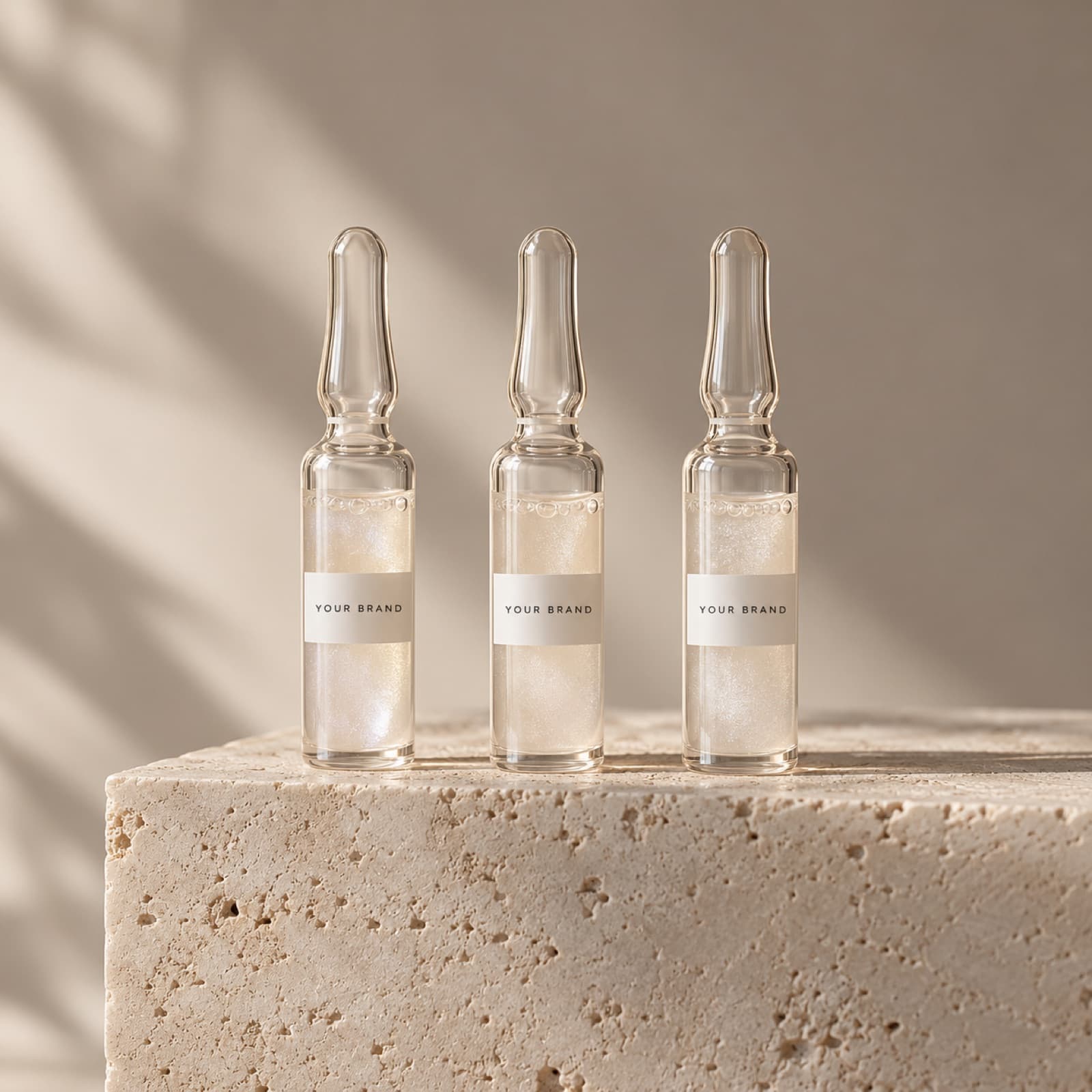
- Ingredient
- Exosome-derived cosmetic ingredients (extracellular vesicles)
- Sources
- Plant-derived vesicles such as cica, rose or ginseng; marine or ferment-derived sources
- Sourcing
- Sourced internationally to your chosen source, concentration and format
- Regulatory footing
- A cosmetic with appearance claims only, not a clinical or injectable product
- Formats
- Serum, ampoule, essence, cream, mask
- Service models
- Private label, white label, custom formulation
What exosome ingredients are
Exosomes are microscopic extracellular vesicles that carry signalling molecules between cells. The exosome materials realistically available for a retail cosmetic are plant-, marine- or ferment-derived, and are best described as exosome-inspired.
They are not the human-cell-derived exosomes used in clinics. Human- or animal-derived stem cell exosomes risk classification as biologics or drug products, so we build cosmetics with alternatives such as plant-derived extracellular vesicles.
Reading the spec sheet
Source, purity and characterisation vary widely between suppliers, so the spec sheet is where the real diligence happens: what the material is derived from, how it is characterised, and what the supplier can and cannot substantiate.
We help you read that sheet honestly and formulate a stable finished product around it, rather than taking a headline ingredient name at face value.
How we keep it stable
Vesicle structures are vulnerable to temperature, high-shear processing and pH changes. Our formulation team builds delivery vehicles that keep them intact through normal distribution.
- Paired with hyaluronic acid, PDRN or niacinamide
- Developed in house, from research through to production
- Filled, labelled and packaged in Chatsworth, California
What your label can say
A topical exosome product sold as a cosmetic in the United States can speak to how skin looks and feels: smoother, firmer-looking, more radiant, a more even-looking tone. Regeneration and tissue repair are drug claims.
Most of the compelling exosome evidence concerns injected or clinically administered products, and regulators have acted against unapproved injectable exosome products. Keep your claims cosmetic from the first draft of the label, and base them on your finished product.
Questions about exosomes.
Can Moe’s Group private label exosome products?+
Yes. We formulate, fill and label exosome cosmetics under private label, white label or fully custom formulation, in serum, ampoule, essence, cream and mask formats, at our facility in Chatsworth, California.
Where do the exosome ingredients come from?+
We source cosmetic ingredients internationally, to your chosen source, concentration and format, and work with you on sourcing transparency. With exosome materials the raw-material specification matters more than in almost any other category.
Are exosomes ready for a retail cosmetic line?+
With care. The category has a genuine biotech story and real consumer demand, but it does not yet have a settled topical-cosmetic evidence base. A brand can enter it well by keeping its claims cosmetic from the first draft of the label.
How do exosomes fit alongside peptides and PDRN?+
Peptides have the most settled cosmetic evidence of the three, PDRN’s strong data is largely injectable rather than topical, and exosomes are the most emerging and the most compliance-sensitive. We manufacture across all three, so a range can keep every claim on the same cosmetic footing.
What is the minimum order?+
You can launch from 200 units on one of our ready-made formulas, or from 1,000 units for a custom formulation.